Empty Nose Syndrome (ENS) Research & Patient Resource

The Laryngoscope

Clinical Efficacy of Topical Nitroglycerin Ointment for Patients With Empty Nose Syndrome

OBJECTIVES: The objective of this study was to assess the clinical efficacy and safety of topical nitroglycerin ointment in patients diagnosed with empty nose syndrome (ENS). METHODS: ENS was diagnosed based on clinical ...

Clinical And Experimental Otorhinolaryngology

Empty Nose Syndrome: An Update on Pathophysiology, Diagnosis, and Treatment

Jun 1, 2026 Ziang Gao, Yong-Ju Jang

Empty nose syndrome (ENS) is a chronic sinonasal condition that typically results from overly aggressive turbinate reduction. It is characterized by nasal dryness, crusting, burning sensation, and a paradoxical perceptio...

Acta Otorhinolaryngologica Italica : Organo Ufficiale Della Societa Italiana Di • Volume 46 Issue 3, Page 246-248

Italian validation of the ENS6Q: a disease-specific questionnaire for empty nose syndrome

RePER reviews coding of ENS: a key step in its recognition in Spain
Spanish Association of Empty Nose Syndrome

RePER reviews coding of ENS: a key step in its recognition in Spain

[Spanish • Translate]
May 26, 2026

The Spanish Association of Empty Nose Syndrome (AESNV) shares an update on the process initiated in December 2025 for the review of the coding of Empty Nose Syndrome (SNV) in the RePER.

Otolaryngology--head And Neck Surgery : Official Journal Of American Academy Of • Volume 175 Issue 1, Page 71-77

Does Total Inferior and Middle Turbinectomy Always Lead to Empty Nose Syndrome?

OBJECTIVE: Empty Nose Syndrome (ENS) is a rare and paradoxical complication often associated with aggressive turbinate reductions. Previous computational fluid dynamic (CFD) modeling has indicated that distorted nasal ai...

American Journal Of Otolaryngology • Volume 47 Issue 4, Page 104852

Three-year outcomes of posterior nasal neurectomy for allergic rhinitis: Clinical outcomes by surgical technique with a focus on ENS-related symptoms

OBJECTIVE: This study aimed to evaluate the 3-year outcomes of submucous inferior turbinectomy combined with posterior nasal neurectomy (PNN) in patients with allergic rhinitis and explore empty nose syndrome (ENS)-relat...

Evidence-based approaches for Empty Nose Syndrome management: a systematic review highlighting current treatments and future directions
Frontiers In Bioengineering And Biotechnology • Volume 14 , Page 1778266

Evidence-based approaches for Empty Nose Syndrome management: a systematic review highlighting current treatments and future directions

It is crucial to identify potential ENS patient subgroups based on the underlying injury type driving symptoms. Such stratification would guide the selection of the most appropriate therapy

Nasal Septal Perforation: A Potential Pitfall in Cotton Testing for Suspected Empty Nose Syndrome-A Case Series and Staged Algorithm
International Forum Of Allergy & Rhinology • Volume 16 Issue 4, Page 426-428

Nasal Septal Perforation: A Potential Pitfall in Cotton Testing for Suspected Empty Nose Syndrome-A Case Series and Staged Algorithm

Cluster Analysis of Patients With Empty Nose Syndrome and Its Relation to Surgical Outcome
The Laryngoscope • Volume 136 Issue 8, Page 3391-3397

Cluster Analysis of Patients With Empty Nose Syndrome and Its Relation to Surgical Outcome

Patients with empty nose syndrome (ENS) present heterogeneous symptom patterns and varied surgical outcomes. This study aimed to stratify patients with ENS based on preoperative 25-item Sinonasal Outcome Test (SNOT-25) s...

Empty Nose Syndrome Treated With Inferior Turbinate Augmentation Using Homologous Costal Cartilage
Plastic And Reconstructive Surgery. Global Open • Volume 14 Issue 2, Page e7466

Empty Nose Syndrome Treated With Inferior Turbinate Augmentation Using Homologous Costal Cartilage

Empty nose syndrome (ENS) is a debilitating, iatrogenic condition caused by a previous inferior turbinectomy; the symptoms of which include subjective feelings of suffocation despite an objectively patent nasal passage. ...

Nasal Air-Jet Sensitivity Differentiates Empty Nose Syndrome and Turbinate Reduction Patients: A Pilot Study
The Laryngoscope • Volume 136 Issue 6, Page 2491-2498

Nasal Air-Jet Sensitivity Differentiates Empty Nose Syndrome and Turbinate Reduction Patients: A Pilot Study

Abnormal nasal mucosal function has been frequently implicated in the symptomatology of empty nose syndrome (ENS), yet with limited evidence. This prospective pilot study aims to compare nasal mucosal sensitivity to air-...

Validity and Reliability of a French Version of the Empty Nose Syndrome 6-Item Questionnaire
Journal Of Clinical Medicine • Volume 15 Issue 2

Validity and Reliability of a French Version of the Empty Nose Syndrome 6-Item Questionnaire

To validate a French version of the Empty Nose Syndrome 6-Item Questionnaire (Fr-ENS6Q). Methods: Thirty-three patients with a diagnosis of empty nose syndrome (ENS) and 50 healthy individuals completed the Fr-ENS6Q and ...

CPAP efficacy in sleep apnea syndrome coexisting with empty nose syndrome: A case report
Acta Oto-Laryngologica

CPAP efficacy in sleep apnea syndrome coexisting with empty nose syndrome: A case report

Jan 3, 2026

Continuous positive airway pressure (CPAP) therapy was initiated and found to be effective. CPAP therapy may be beneficial when SAS complicates ENS, even with a capacious nasal airway.

Rhinology • Volume 63 Issue 6, Page 736-743

Serpentine Sign: evidence of airway compensation in patients with empty nose syndrome

This study aimed to evaluate the presence of Serpentine Signs on computed tomography (CT) images and its impact on the clinical symptoms in patients with empty nose syndrome (ENS). METHODS: A retrospective study analysed...

Assessment of Autonomic Dysfunction in Patients With Empty Nose Syndrome Using the Composite Autonomic Symptom Scale-31
Journal Of Rhinology : Official Journal Of The Korean Rhinologic Society • Volume 32 Issue 3, Page 162-168

Assessment of Autonomic Dysfunction in Patients With Empty Nose Syndrome Using the Composite Autonomic Symptom Scale-31

BACKGROUND AND OBJECTIVES: Empty nose syndrome (ENS) can occur as a consequence of aggressive turbinate surgery. However, some patients with similar surgical histories do not develop ENS, suggesting that host-related fac...

Optimizing Human Nasal Turbinate Stem Cell Dosage for the Effective Treatment of Empty Nose Syndrome
Journal Of Rhinology : Official Journal Of The Korean Rhinologic Society • Volume 32 Issue 3, Page 175-183

Optimizing Human Nasal Turbinate Stem Cell Dosage for the Effective Treatment of Empty Nose Syndrome

BACKGROUND AND OBJECTIVES: Empty nose syndrome (ENS) is a chronic and debilitating condition characterized by atrophic nasal mucosa and impaired mucosal function, resulting in persistent nasal discomfort and breathing di...


A Physiological Explanation of Stress, Air Hunger and Autonomic Dysregulation

A Physiological Explanation of Stress, Air Hunger and Autonomic Dysregulation

Nov 20, 2025

ENS disrupts multiple interlinked systems — nasal mechanics and sensation, lung reflexes, CO? balance, baroreflex function, cardiac rhythm and higher brain regulation — producing a predictable physiological cascade

Personalized Sound Therapy Study for Empty Nose Syndrome Treatment
Stanford University

Personalized Sound Therapy Study for Empty Nose Syndrome Treatment

Oct 3, 2025 Kai Zhao

Stanford University researchers are conducting a groundbreaking clinical trial investigating acoustic resonance therapy (ART) for ENS

Indian Journal Of Otolaryngology And Head And Neck Surgery : Official Publication • Volume 77 Issue 11, Page 5290

Correction to: From Dry Cavities to Healing Pathways: Innovations in Managing Empty Nose Syndrome

[This corrects the article DOI: 10.1007/s12070-025-05445-0.].

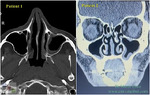
The Discrepancy Between Turbinate Size and Patient Complaints in Empty Nose Syndrome
ENT Istambul

The Discrepancy Between Turbinate Size and Patient Complaints in Empty Nose Syndrome

Sep 15, 2025 Murat Enöz

Turbinate Volume May Be Large, but Functionally Decreased. The health of the outer mucosa of the turbinates is crucial.

Select Categories

Clear All